
 English
 Español
 Français
 한국어
한국어


Airless Bottle Packaging for skincare has become an important choice for Cosmetic Brands that want to protect formulas, improve dispensing performance, and create a convenient customer experience. As Skincare Products become more specialized, packaging must do more than simply hold a cream or serum. It must help protect the formula, support stable product quality, communicate brand value, and work smoothly throughout filling, transportation, storage, and daily use.
Airless Bottle Packaging is designed around a Pump system that dispenses skincare formulas while reducing the need for direct air contact. Instead of relying on a traditional dip tube, many Airless Bottles use an internal piston or flexible inner structure. When the pump is pressed, the product moves upward toward the outlet. This structure can help improve product evacuation and provide more controlled dispensing.
For skincare brands, selecting airless bottle packaging requires careful consideration of formula compatibility, Bottle Capacity, pump dosage, material, decoration, filling method, and user experience. The most attractive bottle is not always the best choice. A successful packaging solution must match the actual skincare formula and the brand’s production requirements.
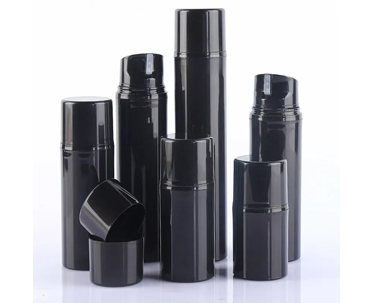
What Is Airless Bottle Packaging?
Airless bottle packaging is a cosmetic container that uses an airless dispensing mechanism to deliver skincare products without depending on a conventional tube reaching down into the formula. The bottle usually includes an outer shell, an inner product chamber, a movable piston or flexible container, a pump actuator, and a dispensing nozzle.
When the consumer presses the pump, the internal mechanism creates pressure and pushes the skincare formula toward the outlet. As the product is used, the piston moves upward or the inner container collapses. This allows the formula to be dispensed from the bottom of the package and helps reduce the amount of air entering the product chamber.
Airless bottle packaging can be manufactured in different shapes, sizes, colors, and materials. Common capacities include small travel sizes, medium daily-use bottles, and larger professional or family-use formats. The outer surface may also be customized through color matching, silk-screen printing, hot stamping, frosting, electroplating, or other finishing processes.
Why Is Airless Bottle Packaging Important for Skincare?
Skincare formulas may contain botanical extracts, vitamins, active ingredients, oils, emulsions, or other sensitive components. Some formulas can be affected by oxygen, repeated exposure, contamination, light, or unsuitable packaging materials. Airless bottle packaging can help create a more controlled environment during product use.
Airless bottle packaging does not replace good formulation, preservation, or suitable storage conditions. However, it can support the overall protection system by reducing repeated exposure to outside air and limiting the need for consumers to open the package. This is especially useful for skincare products that are designed for regular application over several weeks or months.
For brands, the packaging choice can influence customer confidence. A pump that works smoothly, delivers a consistent amount, and keeps the bottle clean can make a skincare product feel more reliable. In competitive beauty markets, these small details can affect customer satisfaction and repeat purchases.
How Does Airless Bottle Packaging Work?
Internal Product Chamber
The skincare formula is stored inside an inner product chamber. This chamber is designed to work with the pump and piston system. Depending on the bottle structure, the inner chamber may be made from a specific plastic material or may use a flexible refill component.
The inner chamber must be compatible with the formula. For example, a water-based serum, thick cream, silicone-rich product, and oil-based treatment may require different material and sealing considerations. Airless bottle packaging should always be tested with the real formula before mass production.
Piston or Flexible Inner Structure
Many airless bottles use a movable piston located beneath the formula. When the pump is pressed, the piston moves upward and pushes the product toward the pump outlet. This movement helps the bottle dispense the product without requiring a long dip tube.
Some airless bottle packaging designs use a flexible inner pouch or collapsible container instead of a rigid piston. The operating principle is similar because the inner structure reduces the amount of air entering the formula chamber as the product is used.
Pump Actuator
The pump actuator is the part pressed by the consumer. It controls the dispensing action and helps release a measured amount of skincare formula. Pump dosage may vary according to the internal design, actuator size, formula viscosity, and product requirements.
A stable pump is essential for airless bottle packaging. The pump should operate smoothly, return properly after pressing, and provide consistent output. If the pump is difficult to press or releases too much or too little product, the customer experience may be affected.
Dispensing Nozzle
The dispensing nozzle directs the formula onto the hand, cotton pad, or skin. Its opening size and shape influence the flow pattern. Thick creams may need a larger or specially designed outlet, while lightweight serums may require a smaller opening for better control.
The nozzle should also help reduce leakage and product residue. A clean outlet improves the appearance of the package and can make the product easier to use during travel or daily skincare routines.
Main Benefits of Airless Bottle Packaging for Skincare
1. Reduced Direct Air Exposure
One of the main advantages of airless bottle packaging is reduced direct exposure to outside air. Traditional open-mouth jars require the consumer to open the container repeatedly and may allow air and contaminants to enter during use. An airless pump system can reduce this repeated exposure.
This feature is useful for many skincare products that contain sensitive ingredients. It may help support formula stability and maintain a more consistent product experience. The actual protection level depends on the complete package, formula, sealing system, and storage conditions.
2. More Hygienic Daily Use
Airless bottle packaging allows users to dispense skincare products without placing fingers directly into the formula. This can help reduce contact between the product and the user’s hands. A pump also keeps the dispensing process more controlled and convenient.
For facial creams, eye products, serums, and treatment formulas, a cleaner dispensing method can improve the overall perception of product quality. Brands should still provide suitable usage and storage instructions because packaging alone cannot guarantee complete product hygiene.
3. Better Product Evacuation
Traditional bottles may leave product at the bottom or along the inner walls, especially when the formula is thick. Airless bottle packaging uses upward movement from the piston or inner container to push the product toward the pump. This can help reduce product residue.
The actual product evacuation rate depends on the inner wall design, piston movement, formula viscosity, pump structure, and filling accuracy. Testing should be carried out with the actual formula to confirm how much product can be dispensed during normal use.
4. Controlled Dosage
A pump can provide a more consistent amount of product with each press. This is useful for skincare products that require a specific application amount. Controlled dosage may also help consumers avoid using too much product at one time.
For brands, consistent dispensing supports a more professional product experience. It can also help with product usage instructions, customer education, and the expected number of applications per bottle.
5. Premium Appearance
Airless bottle packaging can be developed with a modern and premium appearance. Smooth outer surfaces, clean lines, customized colors, and coordinated pump designs can help create a strong visual identity for skincare products.
Brands may choose glossy, matte, frosted, transparent, metallic, or soft-touch effects according to the product positioning. Printing and decorative options can be used to display logos, product names, instructions, and other important information.
6. Convenient Consumer Experience
Airless bottle packaging is easy to use in homes, salons, travel bags, and professional skincare environments. The pump can usually be operated with one hand, and the bottle does not need to be turned upside down to reach the remaining product.
A well-designed airless bottle should also stand steadily on a countertop and remain comfortable to hold. The shape, weight, actuator height, and pump resistance all contribute to the final user experience.
Which Skincare Products Use Airless Bottle Packaging?
Airless bottle packaging can be used for many skincare and personal care products. The correct choice depends on the formula’s viscosity, ingredients, filling temperature, dispensing requirements, and expected shelf life.
Facial moisturizers
Hydrating creams
Anti-aging creams
Facial serums
Eye creams
Skin treatment products
Body lotions
Hand creams
Sun care products
Primer and makeup skincare products
Lightweight gel creams
Professional skincare formulas
Thick creams may require a different pump design from low-viscosity liquids. Products containing particles, waxes, oils, exfoliating ingredients, or special active ingredients may require additional testing. Airless bottle packaging should be selected according to the formula rather than based only on bottle appearance.
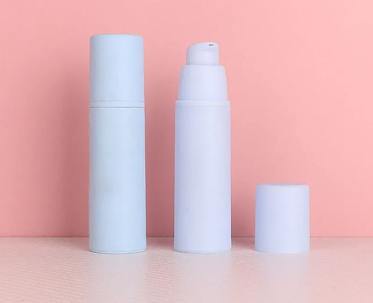
What Brands Need to Check Before Choosing Airless Bottle Packaging
Formula Compatibility
Formula compatibility is the first issue brands should discuss with a packaging manufacturer. The supplier should understand the formula type, viscosity, pH value, oil content, alcohol content, fragrance, active ingredients, and storage requirements.
Some formulas may interact with certain plastic materials, gaskets, springs, or internal components. Compatibility testing can help identify swelling, cracking, discoloration, leakage, odor transfer, or changes in dispensing performance before the product reaches the market.
Capacity and Product Volume
The capacity of airless bottle packaging should match the product positioning and expected usage period. Small bottles are suitable for eye creams, concentrated serums, trial products, and travel packaging. Medium-size bottles are commonly used for daily facial creams, lotions, and skincare treatments.
Brands should confirm nominal capacity, actual filling volume, headspace, bottle dimensions, and label area before production. The selected capacity should also match the filling equipment and shipping requirements.
Pump Dosage
Pump dosage affects both product performance and customer satisfaction. A pump that delivers too little product may require repeated pressing, while a pump that delivers too much product may create waste.
Brands should test the dosage at the beginning, middle, and end of the bottle’s service life. The pump should also be tested after storage, transportation, and temperature changes to confirm stable performance.
Material Selection
Airless bottle packaging may use different plastic materials for the outer bottle, inner container, pump, and other components. Material selection affects appearance, strength, chemical resistance, weight, cost, and recycling considerations.
Material decisions should be based on the formula, package structure, target market, filling process, and brand requirements. A Cosmetic Packaging manufacturer should provide suitable material information and samples for evaluation.
Refill and Sustainability Options
Some brands choose Refillable Airless Bottle packaging to reduce the need to replace the entire outer package after each use. A refill system may include a replaceable inner cartridge or container while allowing the outer shell and pump to remain in use.
Refillable packaging should be evaluated as a complete system. The refill must be easy to replace, securely installed, and compatible with the pump. Brands should also consider the weight of the refill, transportation efficiency, material separation, and end-of-life handling.
Surface Decoration
The appearance of airless bottle packaging plays an important role in the beauty market. Brands may request custom colors, silk-screen printing, hot stamping, electroplating, frosting, coating, or other surface finishes.
Decoration should be checked for color consistency, adhesion, abrasion resistance, chemical resistance, and compatibility with the formula. Approved samples should be retained as a reference for mass production inspection.
Airless Bottle Packaging Manufacturing Process
Reliable Airless Bottle packaging requires coordinated manufacturing processes. The main steps may include product design, mold development, plastic injection molding, component production, surface finishing, assembly, testing, packing, and shipment.
Product Design and Mold Development
The design stage defines the bottle shape, capacity, wall thickness, pump position, refill structure, decoration area, and assembly method. If a standard mold cannot meet the brand’s requirements, a new mold may be developed based on drawings or samples.
Injection Molding
During injection molding, the manufacturer must control material quality, molding temperature, pressure, cooling time, and cycle stability. These factors influence dimensional accuracy, surface appearance, strength, and assembly performance.
Surface Finishing
After molding, the bottle may receive color treatment or decorative finishing. Common options include silk-screen printing, hot stamping, electroplating, frosting, and customized coating. Each process should be inspected to ensure that the finished bottle meets the approved appearance standard.
Assembly and Testing
The outer bottle, inner container, piston, pump, actuator, and nozzle must be assembled correctly. Testing may include appearance inspection, dimension inspection, leakage testing, pump actuation testing, dosage testing, drop testing, and compatibility testing.
For airless bottle packaging, testing should not focus only on the empty container. The complete package should be tested with the actual skincare formula because viscosity and ingredients can affect pump performance and product evacuation.
How to Work with a Reliable Airless Bottle Packaging Supplier
A reliable supplier should be able to support the project from early design to mass production. Before placing an order, brands should ask about factory ownership, mold development capability, production equipment, quality control, sample lead time, customization services, and export experience.
Yuyao Dingyu Plastic Industry Co., Ltd. is located in Yuyao, Ningbo, Zhejiang, China, and operates its own cosmetic packaging manufacturing factory. The company has a factory area of approximately 5,000 square meters, mold development workshops, multiple injection molding machines, and complete testing instruments.
The company specializes in Airless Cosmetic Bottles and also supplies lotion bottles, perfume bottles, PET bottles, and other beauty packaging. OEM and ODM services are available based on customer drawings or samples. The company can support new mold development, color matching, silk-screen printing, hot stamping, electroplating, frosting, and other surface treatments.
Matching pump heads and samples can be provided for evaluation. Quality control is carried out throughout production to help maintain stable dimensions, reliable assembly, consistent surface appearance, and dependable dispensing performance.
With self-operated import and export rights, the company serves customers in North America, South America, Europe, Southeast Asia, the Middle East, Australia, and other international markets. The team replies to inquiries within 24 hours and can provide tailored packaging solutions within one week according to the project requirements.
Common Questions About Airless Bottle Packaging
Can Airless Bottle Packaging Protect All Skincare Formulas?
No packaging can protect every formula under every condition. Airless bottle packaging can help reduce air exposure and improve dispensing, but the formula still needs suitable preservation, storage, and stability testing. Brands should evaluate the complete package with the actual product.
Can Airless Bottle Packaging Be Customized?
Yes. Airless bottle packaging can often be customized in capacity, shape, color, pump dosage, outer finish, printing, and refill structure. Custom mold development may be required for special designs.
Is Airless Bottle Packaging Suitable for Thick Creams?
Many thick creams can use airless bottle packaging, but the pump and inner structure must be suitable for the formula viscosity. Testing is necessary to confirm smooth dispensing and good product evacuation.
Can Airless Bottle Packaging Be Used for Travel?
Airless bottle packaging can be convenient for travel because the pump helps control dispensing and the package can be designed with a secure closure. Brands should still conduct leakage and transportation tests before selling travel-size products.
Is Refillable Airless Bottle Packaging More Sustainable?
Refillable airless bottle packaging may reduce packaging consumption when the outer bottle is reused multiple times. The actual environmental result depends on refill weight, material selection, transportation, reuse frequency, and local recycling conditions.
Conclusion
Airless bottle packaging for skincare offers a practical combination of formula protection, controlled dispensing, convenient use, premium appearance, and flexible customization. Its piston-based or flexible inner structure helps move skincare formulas toward the pump while reducing the need for repeated direct air exposure. This makes airless bottle packaging suitable for many creams, serums, lotions, and treatment products.
However, choosing the Right Airless Bottle packaging requires more than selecting a beautiful bottle. Brands must consider formula compatibility, capacity, pump dosage, material, refill options, decoration, filling equipment, testing, and transportation. A packaging solution should be evaluated with the actual formula and the complete production process.
By working with an experienced cosmetic packaging manufacturer, skincare brands can receive support in mold development, injection molding, surface finishing, pump matching, quality inspection, OEM, ODM, and international delivery. The right airless bottle packaging can improve product protection, strengthen brand presentation, and create a more reliable experience for skincare consumers.
SEO Description: Learn what brands need to know about airless bottle packaging for skincare, including formula protection, pump performance, material selection, capacity, customization, refill options, manufacturing, quality control, and choosing a reliable cosmetic packaging supplier.



 WhatsApp
 Telefon
 Mail
Mail Nachricht
Kommentar
(0)